From December 10, 2026, a US bank or crypto exchange that sends money to MEXC Global, or takes money from it, is in breach of a federal order. The order comes from the Treasury’s Financial Crimes Enforcement Network (FinCEN). It appears in the Federal Register dated November 10, 2026 and takes effect 30 days later, after FinCEN first announced it on November 6, 2026.
By FinCEN’s count, the Seychelles-based exchange handled $16.7 billion linked to Russian illicit finance, sanctions evasion and cybercrime in the five years to May 2026. Treasury Secretary Scott Bessent put it bluntly in the Treasury statement: “Financial institutions cannot have it both ways: Either you support the Iranian regime, or you have access to the U.S. financial system.”
MEXC is a big venue. It was doing more than $1 billion of transactions a day in June 2026, the order says, enough to rank among the world’s 20 largest crypto exchanges. Two crypto businesses had been hit with an order under section 9714 of the Combating Russian Money Laundering Act before it, and both were far smaller.
What the order bans
The ban applies to every financial institution as FinCEN’s rules define the term, which covers banks, broker-dealers and money services businesses, US crypto exchanges among them. None of them may send funds, crypto included, to MEXC or receive funds from it. MEXC’s branches and affiliates inside the US are excluded, and the order has no end date.
Crypto is the awkward part, and the order admits it. There are “few, if any, readily available ways” for an institution to refuse a crypto transfer before it arrives, FinCEN writes.
Its answer is flexibility. Firms may reject coins that come from MEXC, and they get room to judge two harder cases: coins that sat in a self-custody wallet for a long time after leaving MEXC, and transfers their own risk procedures won’t let them send back. A firm that breaks the order on purpose, and its staff, can face civil or criminal penalties.
What FinCEN says MEXC handled
The order’s figures come from FinCEN’s reading of blockchain data and from information it doesn’t publish. Unless a row says otherwise, they cover May 2021 to May 2026.
| What FinCEN counted | Amount |
|---|---|
| Funds tied to Russian illicit finance, sanctions evasion and cybercrime | $16.7 billion |
| Exposure to Russian sanctions evasion | nearly $1.5 billion |
| of which, direct dealings with entities sanctioned by the US, EU or UK | $232 million |
| Business with Garantex and its successor Grinex after both were sanctioned, still going in June 2026 | about $129 million and $4.1 million |
| Transactions with exposure to Iran | about $1.87 billion |
| Money from or to cybercrime actors | at least $1.99 billion |
| Suspected ransomware payments received, January 2022 to July 2024 | over $37.9 million |
More than $1 billion of the Iran exposure was direct business with over 40 Iranian crypto exchangers, FinCEN says, even though MEXC’s own user agreement bars people in Iran. The agency assumes part of MEXC’s business is legitimate and argues that honest users can get the same services from regulated firms.
The third order, and the largest target
Orders under section 9714 are rare. The Federal Register lists two earlier ones, both against crypto businesses linked to Russia, and in both FinCEN described the target as small next to US exchanges.
| Target | In force from | Size, in FinCEN’s words |
|---|---|---|
| Bitzlato | February 1, 2023 | a bitcoin balance 0.0185% of the largest US exchange’s, and under $26 million with it over four years |
| PM2BTC | October 11, 2024 | just over $32 million with one US exchange in nearly 11 years |
| MEXC Global | December 10, 2026 | over $1 billion a day, about 9% of centralized exchange volume in December 2025 |
The lead time is new too. Bitzlato’s order appeared in the Federal Register on January 23, 2023 and bit nine days later, and PM2BTC’s applied from the day it was printed. US firms get a month to cut MEXC off, so this FinCEN order gives them the longest notice of the three.
What it means if you use MEXC
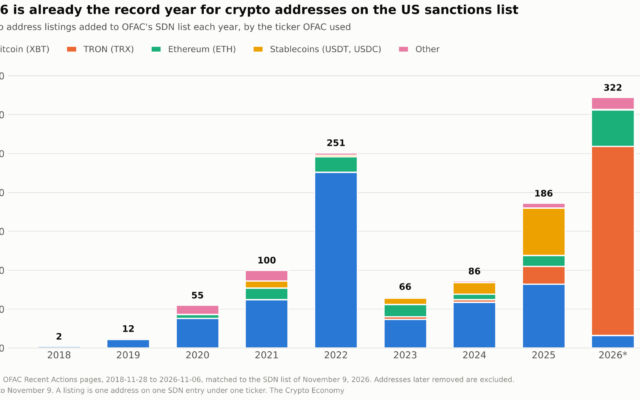
The order doesn’t put MEXC on the sanctions list of the Office of Foreign Assets Control (OFAC). Neither MEXC nor the affiliates the order names appeared in OFAC’s SDN file when we checked on November 10, 2026. So tools that screen addresses against that list, our Address Check included, won’t flag a MEXC deposit address. The restriction sits with the US institution that handles the transfer.
From December 10, 2026, a withdrawal from MEXC to a US bank or a US-regulated exchange can be refused, and so can a payment from those accounts into MEXC. Anyone planning to move money off MEXC through a US platform has until then.
The order binds financial institutions, not individuals, so sending coins from MEXC to your own wallet is outside it, though a US exchange may still refuse them later if it can trace them back.
MEXC has said, according to press reports, that it is reviewing FinCEN’s findings with its legal and compliance teams and has started an independent examination of its anti-money-laundering and sanctions procedures. We found no statement on the order on MEXC’s own blog as of November 10, 2026.