Malicious code delivered through website testing service Optimizely replaced cryptocurrency wallet addresses with an attacker’s own on the sites of 178 organizations on November 16, 2026, according to security firm Report URI. Hardware wallet maker Ledger and bank HSBC were among them. Anyone who copied a wallet address from an affected site that day and sent money should check where it went.
Report URI published the findings, written by security researcher Scott Helme, the same day. The firm checked 1,611 Optimizely snippets and found the code in 188 of them, and it says the real number is likely higher.
Optimizely acknowledged the incident on its status page at 01:02 UTC on November 17, saying “an unauthorized party exploited a vulnerability in Experimentation and used it to add malicious JavaScript to some customer projects.” It says it has fixed the vulnerability and removed the code, without saying how the flaw worked.
How the code swapped addresses
Optimizely Web loads a script file from Optimizely’s servers on each customer’s pages. The attacker wrote code into a field of customer projects called Project JavaScript, Report URI says, so the poisoned file still came from a host the sites already trusted.
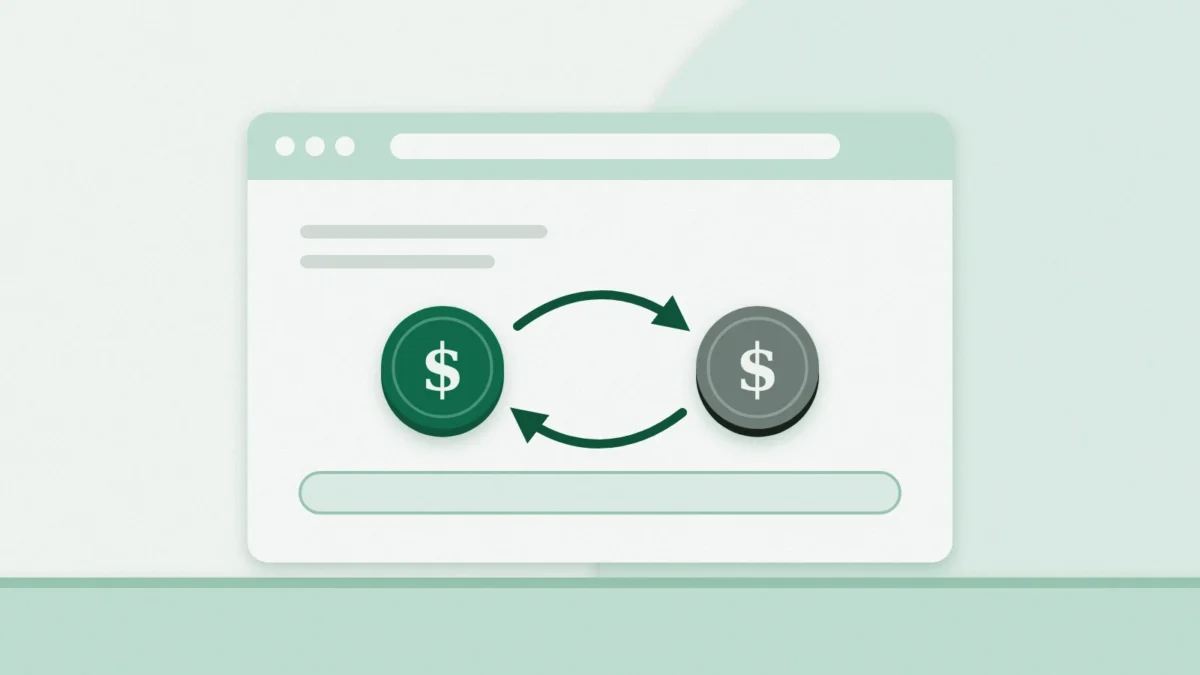
That code loaded a second script. It looked for any valid wallet address for bitcoin, Ethereum and compatible networks, TRON, Solana, TON, Litecoin, Bitcoin Cash and Dogecoin and swapped it for one of the attacker’s.
The swap worked in page text and form fields, in the clipboard when a visitor copied, and in data the page sent out. “Copy an address from any affected page, or from anywhere else while that tab is open, and you may paste the attacker’s,” the report says.
The address swapper first showed up on bbc.com at 08:28 UTC. The script also took cookies and screenshots and tried to load exploit kits on iPhones and iPads, and from 13:43 UTC it skimmed card numbers typed into a site’s own forms. Ledger’s Optimizely file was cleaned at 20:41 UTC, and by 23:11 UTC every infected file was clean, the firm said in an update on November 17.
What reached the attacker’s wallets
Added up, the table in Report URI’s November 17 update puts what reached the attacker’s addresses at about $7,150. Most of it was 0.08528 BTC worth about $5,489, with the rest in litecoin, TRON tokens, ether and USDT on BNB Smart Chain. The firm has no way to see how many cards or cookies were stolen.
Report URI’s list has one attacker address per network, so a swapped address looks nothing like the one the sender meant to pay. That sets the attack apart from address poisoning, where a lookalike copies the first and last characters.
We read the Bitcoin, Litecoin, TRON and Ethereum addresses on public block explorers at 13:20 UTC on November 17. They received 16 incoming transfers on November 16, between 10:26 and 19:57 UTC, all while the code was live. One Bitcoin transfer of 0.0761 BTC, at 13:18 UTC, made up close to nine tenths of the bitcoin received.
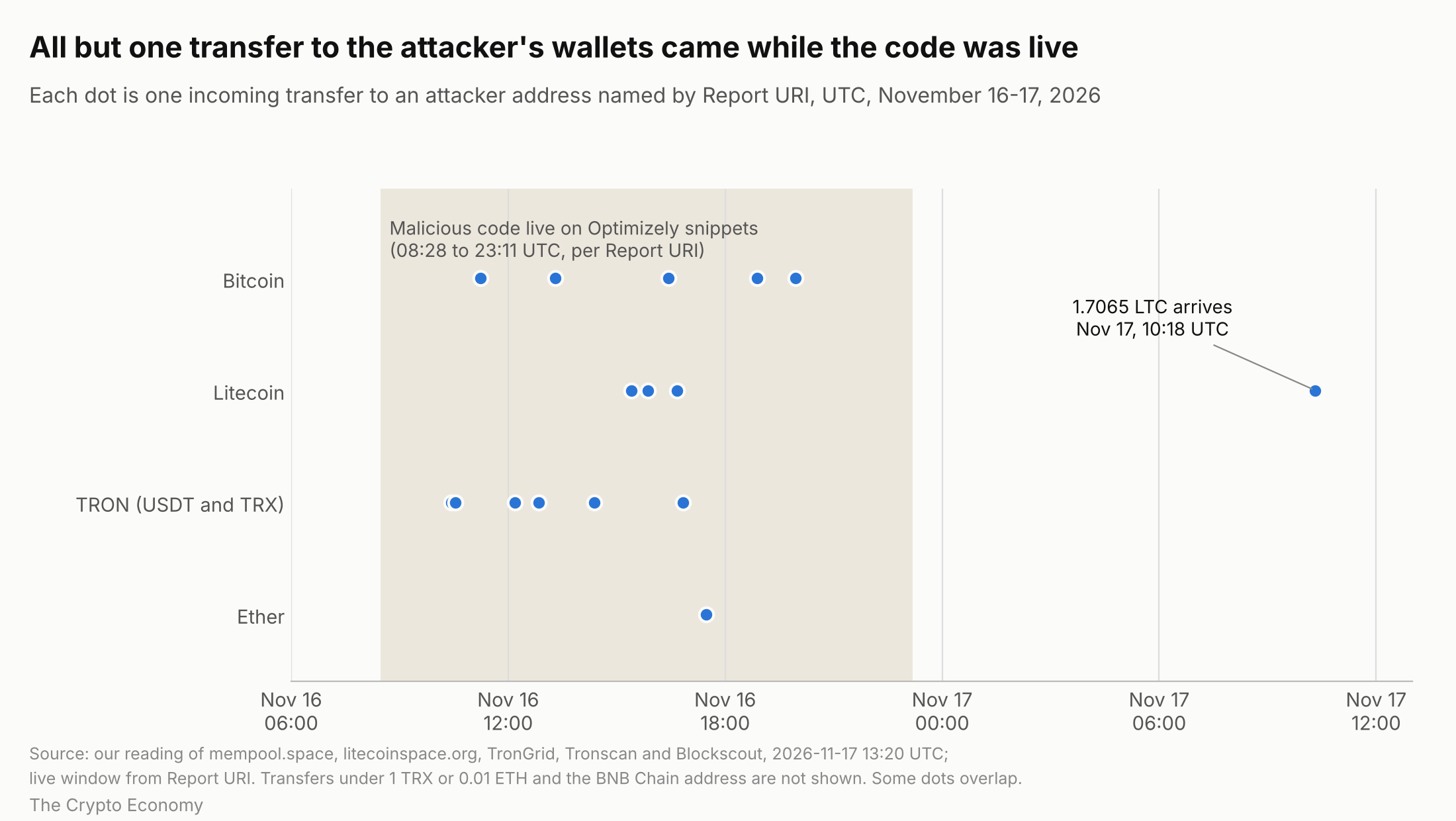
The wallets were emptied in the early hours of November 17. When we read them, the Bitcoin address held no bitcoin, the TRON address no USDT and the Ethereum address about two millionths of an ether. The Solana and TON addresses on the list had no transactions at all. One payment came later. It brought 1.7065 LTC to the Litecoin address at 10:18 UTC on November 17, and the coins were still there when we looked.
How to check an address before you send
The code rewrote addresses in the page and the clipboard alike, so check against a copy that never passed through the browser.
- Get the recipient’s address from a second channel, such as an invoice or an exchange’s deposit screen, and compare the whole string with what you pasted.
- On a hardware wallet, read the address on the device’s own screen before approving, and compare it with that second source.
- Run the address through our crypto address checker, which tests the format and network and flags US-sanctioned or frozen addresses.
- Check any address copied on November 16 and saved to an address book or exchange withdrawal list against the original.
A swapped address is still a valid one, so the checker can’t flag it; only the comparison with the recipient’s own copy does. Report URI also advises iPhone and iPad owners to update to iOS 18.7.3 or later, or iOS 26.3 or later.
If you already sent funds
Compare the destination of every transfer you made on November 16 with the addresses in Report URI’s list. The FBI’s Internet Crime Complaint Center calls crypto transactions irrevocable, so a payment sent from a self-custody wallet cannot be called back.
Report the loss anyway. The center’s crypto guidance lists the most useful details as the addresses, the amounts and types of crypto, the transaction hashes and the dates and times. It also warns against recovery services, especially those charging a fee up front. If you sent from an exchange, give its support team the same details.
Anyone who paid by card on one of the affected sites on November 16 should watch their card statements, Report URI says. Optimizely’s status page still listed the incident as being monitored on November 17.